Perennial Flax
Flax is one of the first plants domesticated by humans, dating back 9,000 years.
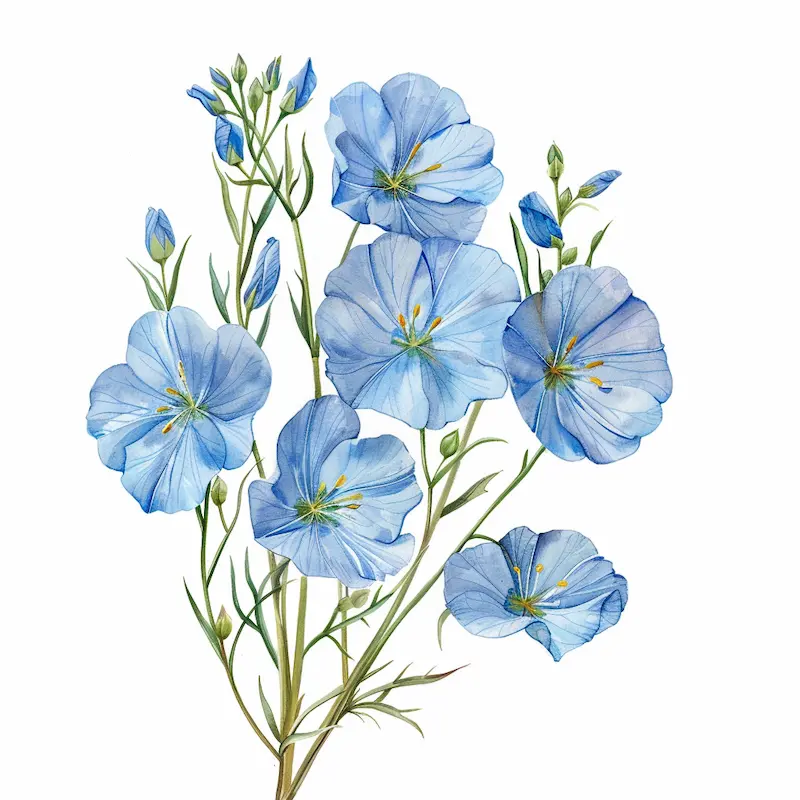
Perennial flax is one of humanity's oldest cultivated plants, with cultivation dating back over nine thousand years. This delicate perennial originates from temperate regions of Eurasia and, thanks to its undemanding nature, has spread across the globe. Today it thrives equally well in gardens from the Carpathians to Ukraine's steppes, requiring only a sunny location and minimal care.
Flax flowers are truly exquisite: delicate, translucent petals in rich sky blue, azure, or occasionally white hues unfold like butterflies from May through August. Admittedly, each bloom lasts only a single day, yet the plant generously produces new ones, creating the impression of continuous flowering. The stems are thin and airy, reaching 30–60 cm in height—like a wave frozen mid-breeze. For those seeking greater garden diversity, cultivars with varying flower tones are available, though classic blue remains most captivating.
Perennial flax is the ideal plant for the lazy gardener. It requires virtually no watering, tolerates drought with ease, and returns with renewed vigour each year. Winter protection is unnecessary—the plant reliably overwinters even in cold regions. Planted in beds alongside annuals or as a companion to ornamental grasses, flax creates an effect of lightness and natural grace. Should you cut the stems back to 15 cm after summer flowering concludes, a second flowering often ensues.
This modest plant deserves your attention not merely for its beauty. Gazing upon its delicate blue flowers connects you to the profound history of human civilisation—for it was from flax fibres that our ancestors wove clothing and sail canvas millennia ago. Today, perennial flax reminds us that the most beautiful things are often the simplest.
Perennial Flax — planting & location
Each flower lasts one day, but new blooms continue to form.
How to water Perennial Flax
Drought tolerant.
Fertilizing and pruning: Perennial Flax
Cut back to 15 cm; may bloom again.