Butternut
The bark of butternut produced a yellow dye for the indigenous peoples of America.
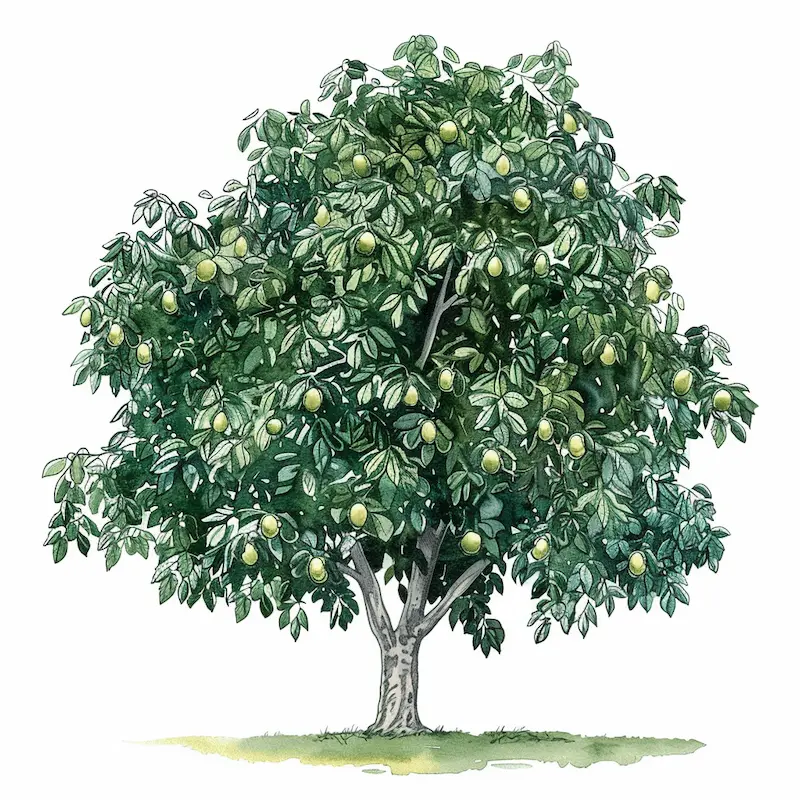
Butternut is one of the most interesting nut-bearing plants, originating from the north-eastern part of North America. This species has been cultivated for over three centuries and thrives well in temperate climates. Unlike the more popular black walnut, it is less demanding in terms of growing conditions, although it remains undeservedly forgotten in our gardens.
The tree reaches 15–20 metres in height and has an attractive, spreading crown with delicate compound leaves that develop late in spring. In April–May, female and male catkins appear on it—quite a captivating sight. Butternut can be grown as a tree or as a compact shrub, offering greater flexibility when choosing a location in the garden. The ripe fruits—oval nuts in a soft husk—have a pleasant flavour and are harvested in autumn.
This plant is versatile in the garden. It can be used as a standalone feature on a lawn or as part of a composition with other nuts—black walnut or Manchurian walnut. Unlike these, butternut is less aggressive towards neighbouring plants, making it easier to fit into medium-sized gardens. The tree requires no complicated cultivation techniques: moderate watering, minimal pruning of diseased branches, and it develops naturally in a fine form.
Particularly interesting is the fact that the bark of butternut has been used by native peoples of America for centuries to produce natural yellow dye for textiles. This is a wonderful example of how nature provides us not only with nutritious fruits but also with a rich palette of possibilities. If you are seeking a frost-hardy, undemanding walnut that will bring genuine North American character to your garden, butternut is undoubtedly a worthy choice.
Butternut — planting & location
More frost-hardy than black walnut, though less commonly known.
How to water Butternut
Water young plants regularly.
Fertilizing and pruning: Butternut
Remove only dead and diseased branches.