Red Buckeye
Red Buckeye is a more beautiful and compact relative of the Horse Chestnut.
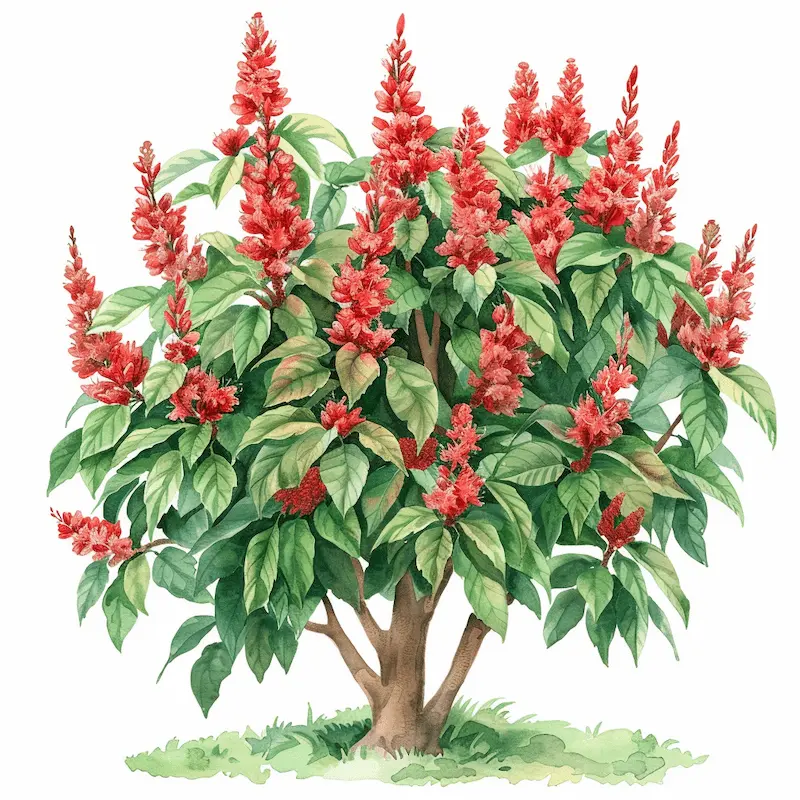
Red Buckeye is one of the most attractive representatives of the genus Aesculus, native to the south-eastern regions of North America. Unlike its gigantic relative—the Horse Chestnut—Aesculus pavia is a more compact plant, yet equally striking. This beauty was introduced to cultivation as early as the eighteenth century and has since graced numerous European and American gardens.
Red Buckeye creates the impression of a genuine spring fireworks display: its branches are covered with brilliant red and orange flowers, gathered in dense panicles. Flowering occurs in May to June and lasts considerably long, leaving the gardener enchanted. Unlike the large Chestnut, this species retains more modest dimensions, making it ideal for gardens with limited space. Young foliage often displays bronze or reddish tones, adding even greater ornamental appeal at the beginning of the season.
In the garden, Red Buckeye reveals its potential alongside birches, rowans, and other mid-storey trees. It works beautifully both as part of mixed plantings and as an independent accent feature. This plant is undemanding regarding growing conditions, adapts well to various soil types, and thrives equally well in sunny and semi-shaded locations.
Why does Red Buckeye deserve a place in your garden? Because it offers you everything one might admire in the Horse Chestnut—grandeur and beauty—but in a more compact, more vibrant, and less aggressive package. Furthermore, its brilliant flowers attract pollinating insects, bringing vitality and sound to the garden, which is sometimes greatly appreciated.
Red Buckeye — planting & location
More compact than Horse Chestnut with brighter flowering
How to water Red Buckeye
Moderate watering
Fertilizing and pruning: Red Buckeye
Only diseased branches