Syrian Hibiscus
The national flower of South Korea, known as Mugunghwa (hibiscus)
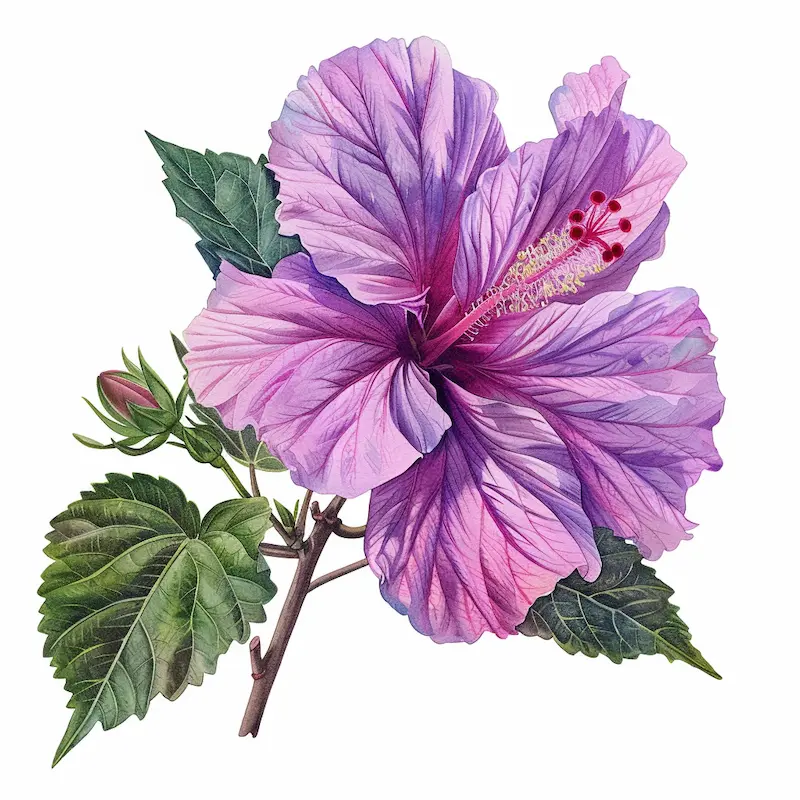
Rose of Sharon, or Syrian Hibiscus, is a charming shrub that has graced gardens for centuries. Originating from the warm regions of Asia, it has long captivated gardeners worldwide with its remarkable hardiness and generous flowering. In July, when most spring blossoms have already faded, this hibiscus launches its spectacular display, producing pink, white, lilac, and bicoloured flowers right up until the first frosts arrive.
It is truly the queen of the summer garden — exquisite flowers with silky stamens and extraordinary grace await you each morning. Plant breeders have cultivated dozens of varieties, from simple single blooms to opulent doubles, from solid colours to striking colour combinations. Some varieties can be regarded as genuine sculptures of nature, so refined are their forms. In a sunny location, the shrub transforms into a cloud of flowers, and its natural grace make it indispensable in landscape design.
In the garden, Rose of Sharon will find an honourable place alongside butterfly bush, tree mallow, or roses — these plants beautifully complement one another with their colours and structure. It looks equally striking in graceful compositions of Western European-style gardens and in traditional Ukrainian cottage gardens, where our grandmothers treasured it long ago. The shrub copes with far from ideal conditions, requiring only moderate watering and a sunny location.
Interestingly, in South Korea this hibiscus is revered as the national flower and is called Mugunghwa. For the Ukrainian gardener, this is wonderful news — a plant that connects us with distant cultures, takes up little space, yet gifts us with boundless joy and colour from summer until autumn.
Syrian Hibiscus — planting & location
Flowers from summer until frost
How to water Syrian Hibiscus
Avoid waterlogging
Fertilizing and pruning: Syrian Hibiscus
Cut back by one-third to stimulate flowering