Butterfly Bush
Attracts up to 100 butterflies in a single day of flowering
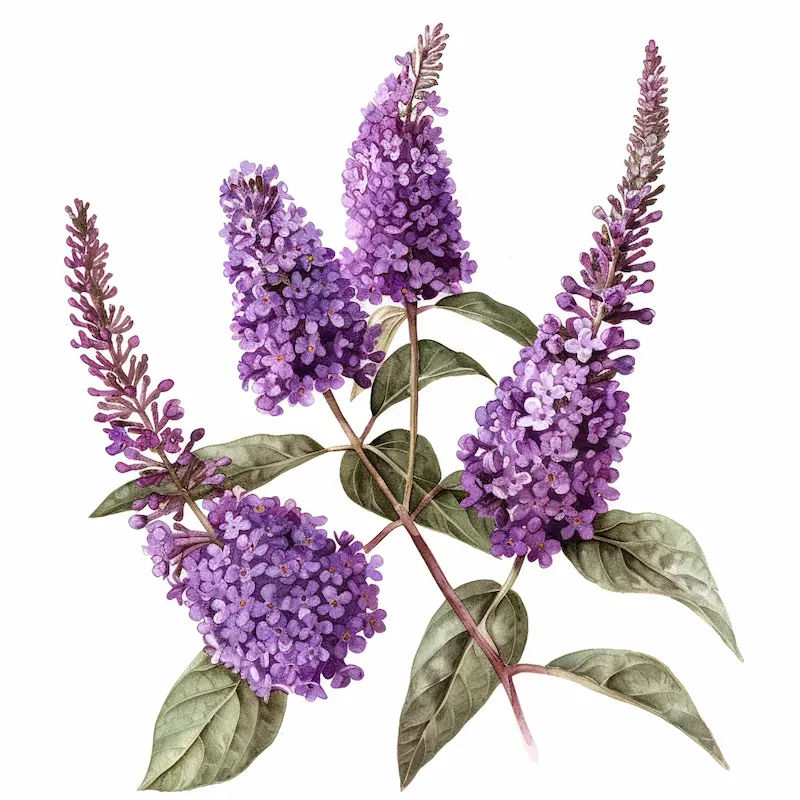
Butterfly Bush is one of the most beloved ornamental plants among gardeners worldwide, although its family originates from the mountainous regions of China. This wonderful shrub was introduced to Europe in the nineteenth century, and since then it has become indispensable for those who dream of a garden full of movement and vibrant colours. The plant is equally valued by both beginners and experienced gardeners for its low-maintenance nature and generous, prolonged flowering.
Butterfly Bush is easily recognised by its characteristic long, pointed flower spikes that bloom from July to October in a captivating palette of colours: from soft lilac tones and deep blues to soft pinks and pristine white. The shrub forms a lush crown that looks absolutely splendid against the summer garden backdrop. Breeders have developed numerous cultivars, allowing you to create compositions in virtually any shade — from classic purple to exotic yellow and vibrant red, satisfying the taste of every gardener.
This plant works in the garden as an excellent specimen or in pleasing company with lavender, catmint and hibiscus, creating harmonious landscape compositions. But the true charm of Butterfly Bush lies in its nickname — the "butterfly plant". Over the course of a single day of blooming, it can attract up to a hundred winged visitors, transforming your garden into a living theatre. Watching this dance of butterflies around the opening flowers is a true wonder of nature, one that sharing with your family becomes genuine joy.
If you are seeking a plant that brings great beauty without exhausting maintenance, Butterfly Bush is your ideal choice. It adapts to various conditions, responds well to pruning, and rewards the gardener year after year with fresh waves of enchanting blooms.
Butterfly Bush — planting & location
Attracts butterflies — a 'butterfly plant'
How to water Butterfly Bush
Moderate watering
Fertilizing and pruning: Butterfly Bush
Cut back to 20–30 cm from ground level annually