Siberian Bugloss
The foliage becomes even larger and more beautiful after flowering—decorative throughout summer and autumn.
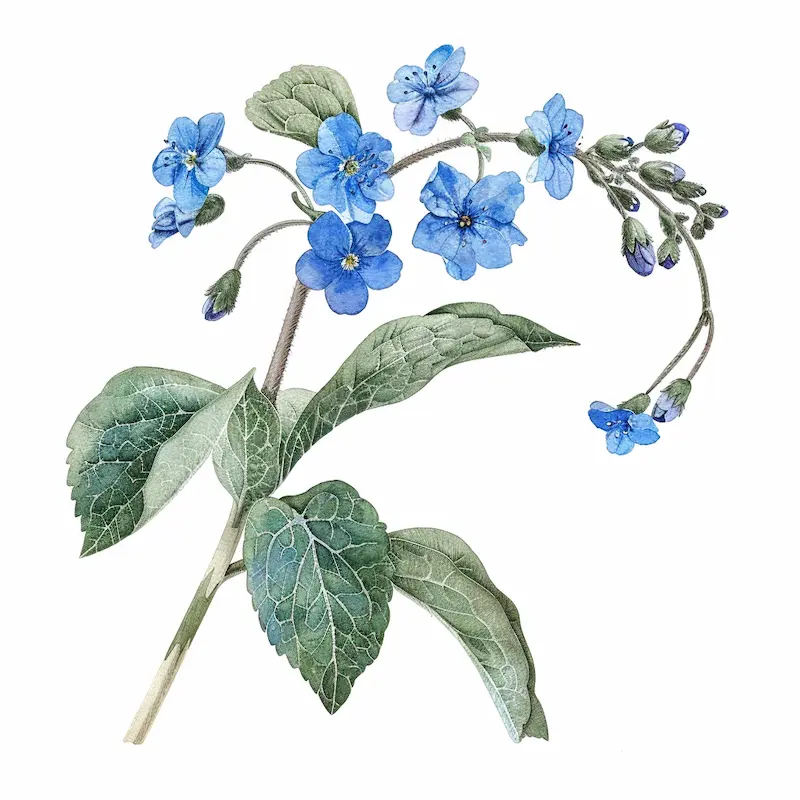
Siberian Bugloss is one of the most beloved plants among European gardeners, and deservedly so. Native to the forests of Siberia and the Caucasus, it has adapted with ease to gardens on any continent. This perennial has changed little since its first scientific description — a true natural specimen that has retained its pristine character and dependability.
The decorative foliage will strike you first. Large heart-shaped leaves form a luxurious carpet, across which tiny blue flowers bloom in April and May, resembling forget-me-nots. Plant breeders have developed several interesting varieties — some with white flowers, others with striking variegated foliage. Yet regardless of your choice, even after flowering the foliage continues to expand, becoming ever larger and more striking, bestowing undeniable beauty on the garden until late autumn.
This is a plant for shaded and semi-shaded corners where little else grows. It harmonises beautifully with hostas, astilbes, and geraniums, creating picturesque garden compositions. Brunnera demands consistently moist soil and is undemanding as to its composition — the main requirement is that it remains fertile and does not dry out in summer sun.
This plant offers practical advantages too: it is almost disease-free, rarely troubled by pests, and requires no laborious maintenance. Water generously, feed moderately — and it will delight you for two decades in one location. If you seek an easy-to-maintain plant with great ornamental potential, Brunnera is exactly what your garden needs.
Siberian Bugloss — planting & location
Large decorative foliage, ideal for shaded locations.
How to water Siberian Bugloss
Do not allow the soil to dry out during hot weather.
Fertilizing and pruning: Siberian Bugloss
Remove spent flower clusters; remove foliage in autumn.