Field Elm
The elm features prominently in Slavic legends as a tree that protects against lightning strikes.
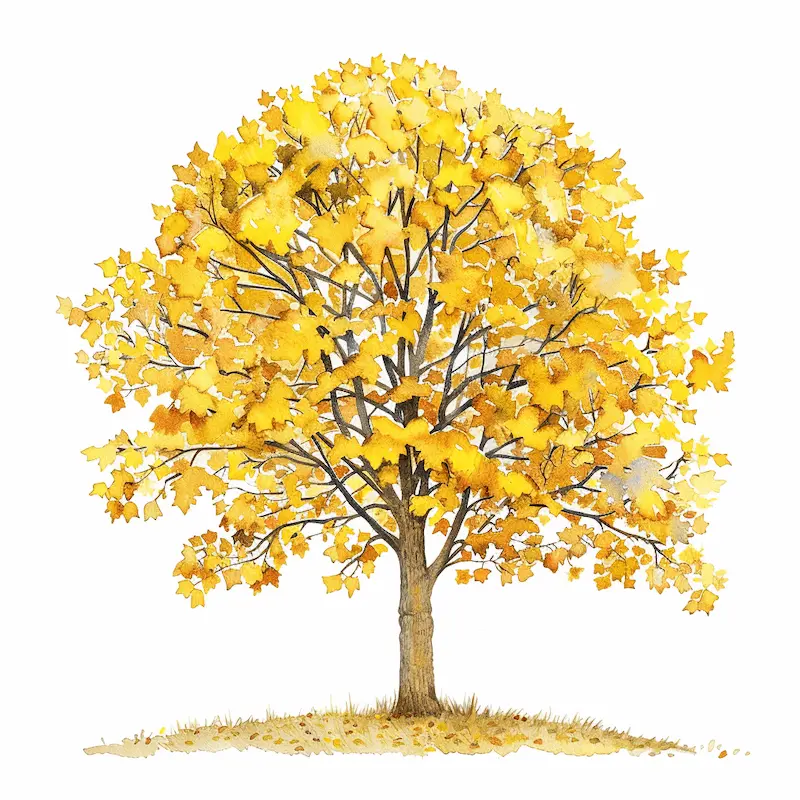
The Field Elm is one of the oldest trees in European culture, treasured by humanity for millennia. This species originates from the southern and western regions of Europe, but has naturalized throughout the continent, becoming an integral part of both urban and rural landscapes. In Ukraine, the elm has always symbolized strength and longevity, and was willingly planted near aristocratic estates and churches as both protection and ornament.
The tree develops into an elegant form with a spreading, dense crown that provides wonderful cool shade on hot days. From March to April, inconspicuous yet graceful reddish-brown flowers bloom, preceding the appearance of small winged seeds. In autumn, the elm truly shines: its foliage takes on a brilliant yellow and golden hue, transforming the tree into a genuine golden ornament of the garden. The elm wood is renowned for its flexibility and strength — which is precisely why carpenters and builders have valued it for centuries.
In garden composition, the field elm is a universal partner for various plantings. It harmonizes beautifully with birch, ash, and maple, creating natural, dynamic groupings. The tree is equally valuable for spaces around houses and for large park areas. Its undemanding nature regarding soil and ability to thrive in sunny and semi-shaded locations make it ideal for any garden situation.
Ancient Slavic legends speak of the elm as a protective tree against lightning strikes — perhaps this is why it was so often planted near sacred sites. If you seek a tree that combines beauty, spiritual depth, and reliability, the field elm awaits in your garden.
Field Elm — planting & location
Beautiful autumn colouration, strong timber.
How to water Field Elm
Water young trees regularly.
Fertilizing and pruning: Field Elm
Remove only dead and diseased branches.