Japanese Anemone
Toxic to cats and dogs
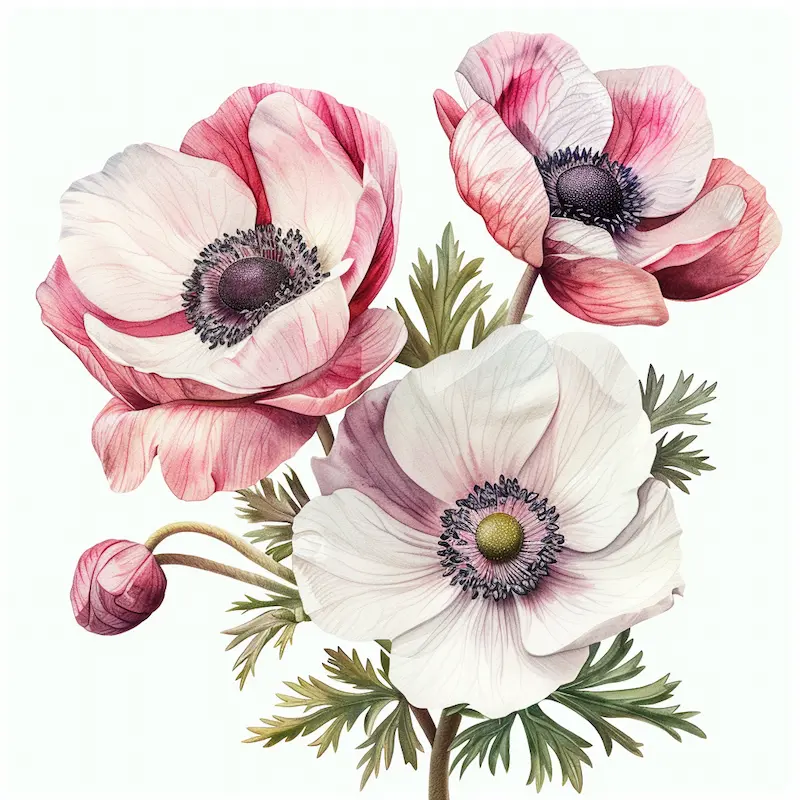
Japanese Anemone is one of the most beloved late-flowering plants that European gardeners began cultivating in the nineteenth century. Despite its romantic name, Anemone × hybrida is a hybrid of Asian origin, created by plant breeders based on Japanese and Chinese anemone species. Gardeners owe this plant the opportunity to have flowers in places where most ornamental garden plants simply cannot survive—in dense shade and partial shade.
The graciousness of Japanese Anemone lies in its delicate, long stems, at the tips of which bloom tender hollyhock-like flowers—from pure white to deep pink with contrasting yellow centres. The foliage is deeply lobed, wrinkled, and dark green, creating a beautiful foundation for the flowers. Gardeners most often choose the classic 'Honorine Jobert' with snow-white flowers and the elegant 'Queen Charlotte' with pink colouring, which is particularly striking in group plantings.
This plant is a treasure for problematic garden areas: beneath tree canopies, in northern corners, and near blank walls of buildings. Japanese Anemone comes to the rescue precisely when the garden tires from summer heat—from August through October, the bush becomes completely covered in flowers, giving the autumn garden a second wind and romantic atmosphere. It combines beautifully with hostas, ferns, ornamental grasses, and autumn asters, creating soft, hazy compositions.
For gardeners in northern and central Ukraine, Japanese Anemone is a gift from nature: it calmly withstands frosts, requires no complicated care, and flowers when most gardens have fallen silent. If you are seeking a plant that transforms dark and shady corners into an autumn garden of dreams—Japanese Anemone awaits you.
Japanese Anemone — planting & location
Late-flowering, ideal for shade
How to water Japanese Anemone
Mulch to protect the rhizome
Fertilizing and pruning: Japanese Anemone
Leave 15–20 cm of stem