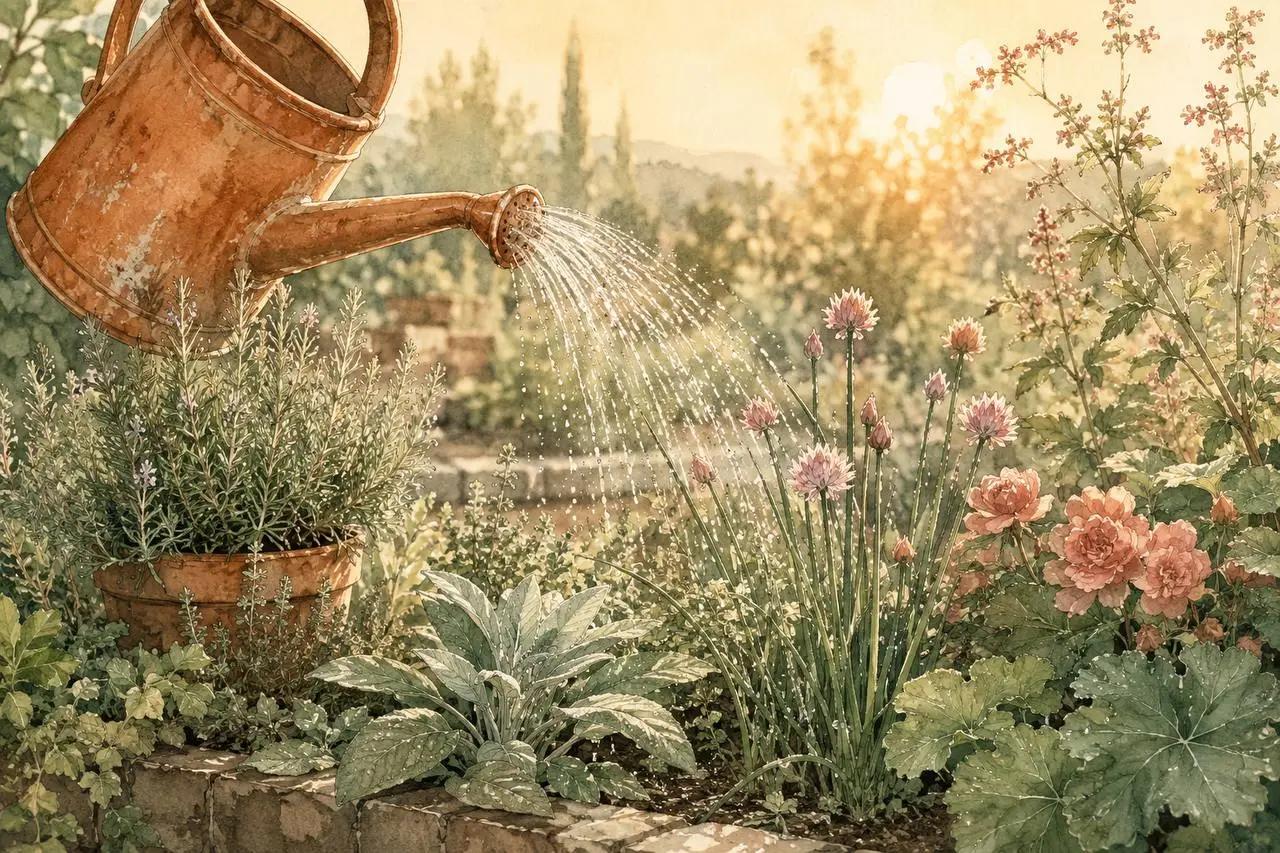
Standing over your flower beds with a watering can at three in the afternoon, the soil practically hissing with thirst — sound familiar? I used to do this too, until I realised: it was precisely that midday watering that was killing my plants. Not the heat. Not the drought. My own well-meaning care at the wrong time.
There's only one answer: early morning or after sunset in the evening. Ideally before 9am or after 7pm. Why does this matter so much? During the day, water evaporates from the soil surface before roots have a chance to absorb it. Droplets on leaves act as tiny magnifying glasses and can leave scorch marks. And the sudden temperature shock of cold water on sun-warmed roots causes real stress for the plant.
Morning watering has another advantage: foliage has time to dry before nightfall. Wet leaves overnight are an open invitation for fungal disease — especially relevant for roses, tomatoes and cucumbers.
Less often, but deeper: training roots to seek out water
The most common mistake is shallow daily watering in small amounts. This trains roots to stay near the soil surface — exactly where it's hottest and driest in summer. The plant becomes dependent on you like a drip feed.
The right approach: water less frequently but generously. Every 2–3 days, soaking the soil to a depth of 20–30 centimetres. Roots will follow the moisture downward, where it's cooler and lasts longer. A plant with deep roots is far more resilient to short dry spells. To check the depth, simply push a stick or finger into the soil an hour after watering.
Mulch — your best ally when watering in the heat
If you haven't mulched your beds yet, July isn't too late to start. A 5–7cm layer of mulch (straw, wood chips, grass clippings, compost) works wonders: it lowers soil temperature by 5–8 degrees, retains moisture twice as long, and suppresses weeds competing with your plants for water.
One detail to remember: don't press mulch right up against the stem — leave a 3–5cm gap. Otherwise the moisture encourages rot at the crown. This is particularly important for roses, tomatoes and squash.
Who needs the most attention: plants at higher risk
Not all plants suffer equally in heat. Those most at risk include: recently planted specimens in their first year, container plants (pots can dry out within hours in full sun), vegetables in flower or fruit (tomatoes, peppers, courgettes), and plants on south-facing aspects without shade.
Container plants in a heatwave may need watering daily or even twice a day. Check the soil each morning: if the top 2–3 centimetres are dry, it's time to water. Or simply lift the pot — if it feels light, it's dry.
Drip irrigation: is it worth the investment?
If you have vegetable beds or borders that need regular watering, a drip system will pay for itself within a single summer. You don't need expensive automation: simple drip tape with a tap timer costs little and saves hours of work. Water goes directly to the roots, foliage stays dry, and water use is roughly half that of watering by hose.
A garden in a heatwave isn't a disaster — if the watering is done right. Early morning water, sufficient depth, good mulch and a little patience will see your plants through even the hottest July.