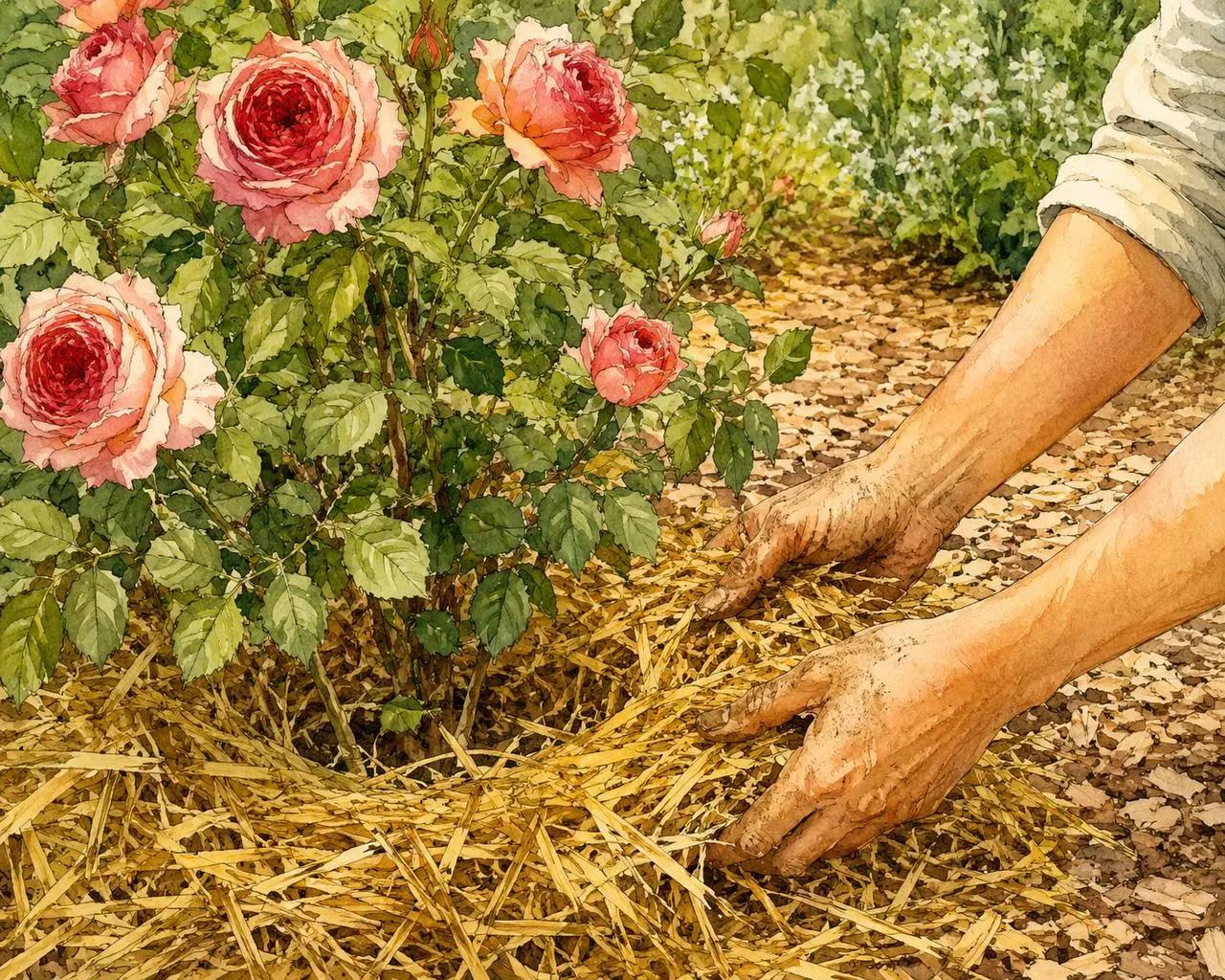
Mulching is one of those garden practices that growers either adopt wholeheartedly and never look back, or keep putting off — only to regret it every time a heatwave hits in August. A layer of organic or mineral material spread across the soil surface solves several problems at once: it holds moisture, suppresses weeds, protects roots from overheating, and gradually enriches the soil with nutrients.
Why mulch: benefits you'll see within a week
The most immediately noticeable effect of mulch is moisture retention. Under a five-to-seven centimetre layer, soil stays moist roughly twice as long as bare ground — which matters enormously during summer dry spells and prolonged hot weather [→ LINK: "Watering in the heat: how to keep your garden alive in July"]. Fewer watering sessions, less time spent with the hose, and less stress on your plants.
The second effect is weed suppression. Mulch cuts off light to weed seeds sitting in the soil, and most of them simply fail to germinate. The occasional seedling that does manage to push through grows weak and leggy, and pulls out easily by hand — no hoe required.
The third effect is less obvious but equally valuable: mulch acts as a thermal buffer, preventing the soil from overheating under direct summer sun and from freezing solid in winter. This protects the roots of roses, fruiting shrubs and perennials during the moments when they are most vulnerable.
[H2] What to use: organic vs mineral mulch
Organic mulch is the most widely used and most beneficial choice for the majority of gardens. It includes straw, lightly wilted grass clippings, wood chips, bark from coniferous or deciduous trees, compost, leaf mould and shredded prunings. The great advantage of organic materials is that they break down gradually, feeding the soil with humus and improving its structure with every passing season.
Straw and dry grass are the most accessible options — easy to source, good at covering the surface, and quick to mineralise. Wood chips and bark decompose more slowly, making them ideal for paths and ornamental plantings where a longer-lasting effect is needed. Compost and leaf mould are the most nutritionally valuable, and work best around vegetables and flowering plants.
Mineral mulch — gravel, crushed stone, expanded clay — suits rock gardens and plants that need excellent drainage and dislike excess moisture. It does not decompose, so the soil beneath it receives no nutritional benefit, but it also does not dry out and stays largely weed-free.
When to mulch and how to do it properly
Mulching is done twice a year: in spring, once the soil has warmed but before it dries out (late April to early May), and in autumn, after the first frosts, to insulate roots against winter cold. In summer, top up any areas where the mulch has settled or broken down.
Before laying mulch, water the soil thoroughly — mulch applied to dry ground simply seals the drought in. Remove any weeds and lightly loosen the surface. Lay the material five to seven centimetres deep — enough to retain moisture and suppress weeds without going overboard. Excessively thick layers (over ten centimetres) can restrict soil aeration and cause rot at the root crown.
The most important rule of all: leave a clear gap of five to ten centimetres around the base of each plant stem or trunk. Mulch pressed right up against the stem traps heat and moisture, creating ideal conditions for fungal disease and rodents.
Common mistakes and how to avoid them
The most frequent mistake is laying freshly cut grass in a thick layer. Fresh clippings mat together, block airflow and begin to rot, generating heat and an unpleasant smell. Always wilt the grass for a day or two in the sun before using it as mulch.
The second mistake is using conifer bark around vegetables. Conifer bark acidifies the soil, which suits blueberries or rhododendrons but harms most vegetable crops. For the kitchen garden, straw, compost or leaf mould are far better choices.
The third mistake is mulching cold soil in spring. Covering ground that has not yet warmed up slows the warming process considerably, holding back plant growth at the start of the season. Wait until the soil reaches ten degrees Celsius before you reach for the mulch.