Pot Marigold
A calendula infusion repels Colorado beetles — plant alongside potatoes for natural pest control.
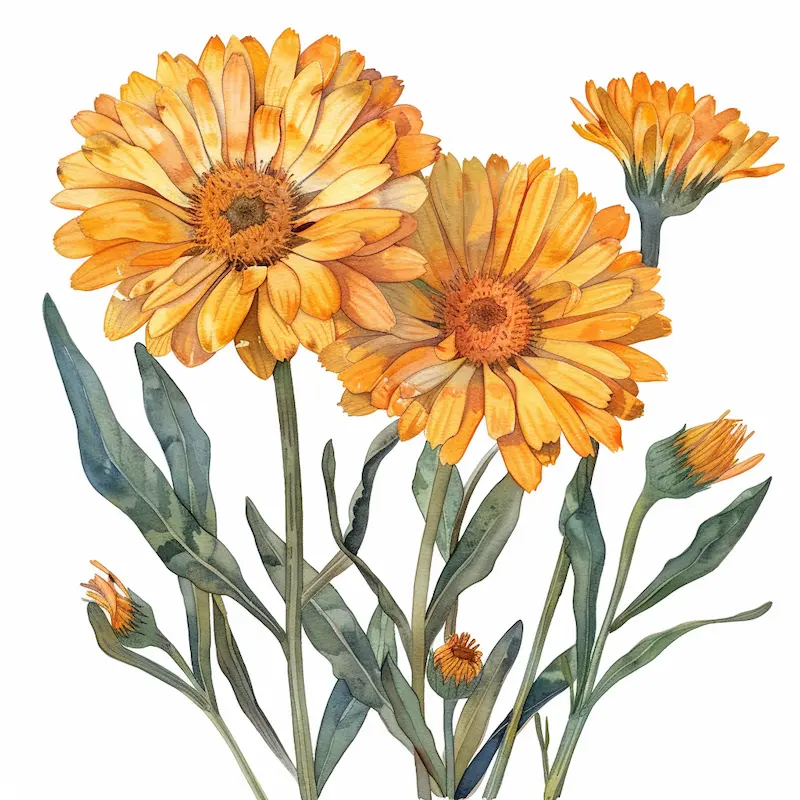
Pot marigolds are plants with character: unfussy, generous, and almost cheekily vibrant. Their orange-yellow flower heads begin to open in June and do not stop until the first frost, filling the garden with warm light even on gloomy August days. It is no wonder that in popular tradition marigolds are called "little suns" — they truly resemble a small household sun that refuses to set.
The marigold's native home is the Mediterranean, yet it has long been firmly established in Ukrainian gardens. Even our grandmothers planted marigolds near the vegetable patch — and it was far more than just beauty. The phytoncides released by the plant repel aphids, whiteflies, and even nematodes in the soil. Therefore, marigolds are the perfect companion for tomatoes, peppers, and roses.
The healing properties of calendula have been known since medieval times. The flowers contain carotenoids, flavonoids, and essential oils with powerful anti-inflammatory and wound-healing action. A tincture and salve made from marigolds are staples of the home medicine cabinet. The petals are edible: they can be added to salads, soups, and rice as an affordable saffron substitute — the flavour is neutral, but the colour is absolutely luxurious.
In the garden, marigolds require virtually no care. Sow the seeds directly into open ground in spring — and they will manage themselves. Moreover: at the end of the season, leave a few flower heads to mature, and the following spring young plants will appear from self-seeding. Marigolds are a plant that looks after itself whilst delighting you in the process.
Pot Marigold — planting & location
Medicinal, pest-repelling, self-seeding.
How to water Pot Marigold
Avoid overwatering.
Fertilizing and pruning: Pot Marigold
Remove spent flowers to extend the flowering season.