Saucer Magnolia
Magnolia is one of the oldest flowering plants, dating back 95 million years.
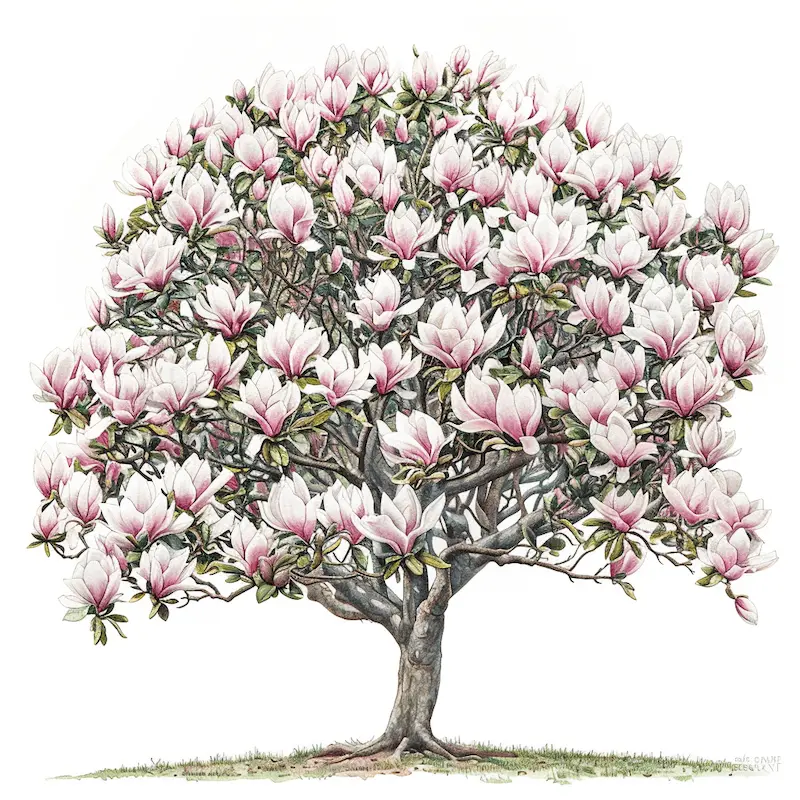
Saucer Magnolia is a true queen of spring in the garden, offering an unforgettable spectacle each year before the leaves even unfurl. Its large saucer-shaped flowers, ranging in tone from white to deep lilac, bloom from April to May, filling the air with a delicate fragrance. This hybrid, created by French plant breeders in the nineteenth century, combines the finest characteristics of its parent forms, making it one of the most popular magnolias in the world.
The inner world of this plant amazes with its beauty: large petals are often painted in two colours—a lighter centre and a darker edge, distinctly pink or lilac. There are numerous cultivars to choose from, ranging from the classic 'Lenei' with richly pink flowers to the delicate white 'Alba Superba'. Each flower rosette can retain its beauty for a week or two, creating an effect of prolonged, intermittent blooming. Even as the flowers fade, young leaves with their characteristic burgundy tint continue to delight the eye.
In the garden, Saucer Magnolia is a classic choice for spring decoration. It pairs beautifully with rhododendrons, ornamental cherries, and conifers, creating multi-layered compositions. The plant requires undemanding care, grows well in semi-shaded locations, and appreciates good, simple soil. The central and western regions of Ukraine are its natural habitat.
What truly enchants about Saucer Magnolia is its history. It descends from one of the most ancient genera of flowering plants, with a lineage reaching back approximately 95 million years. When you plant this specimen, you invite into your garden a living witness to ancient times—and each spring flowering reminds us of the unchanging beauty of nature throughout the ages.
Saucer Magnolia — planting & location
Flowers before leaves unfurl, an unforgettable spectacle
How to water Saucer Magnolia
Do not allow the soil to dry out
Fertilizing and pruning: Saucer Magnolia
Remove only dead and diseased branches—magnolia tolerates pruning poorly