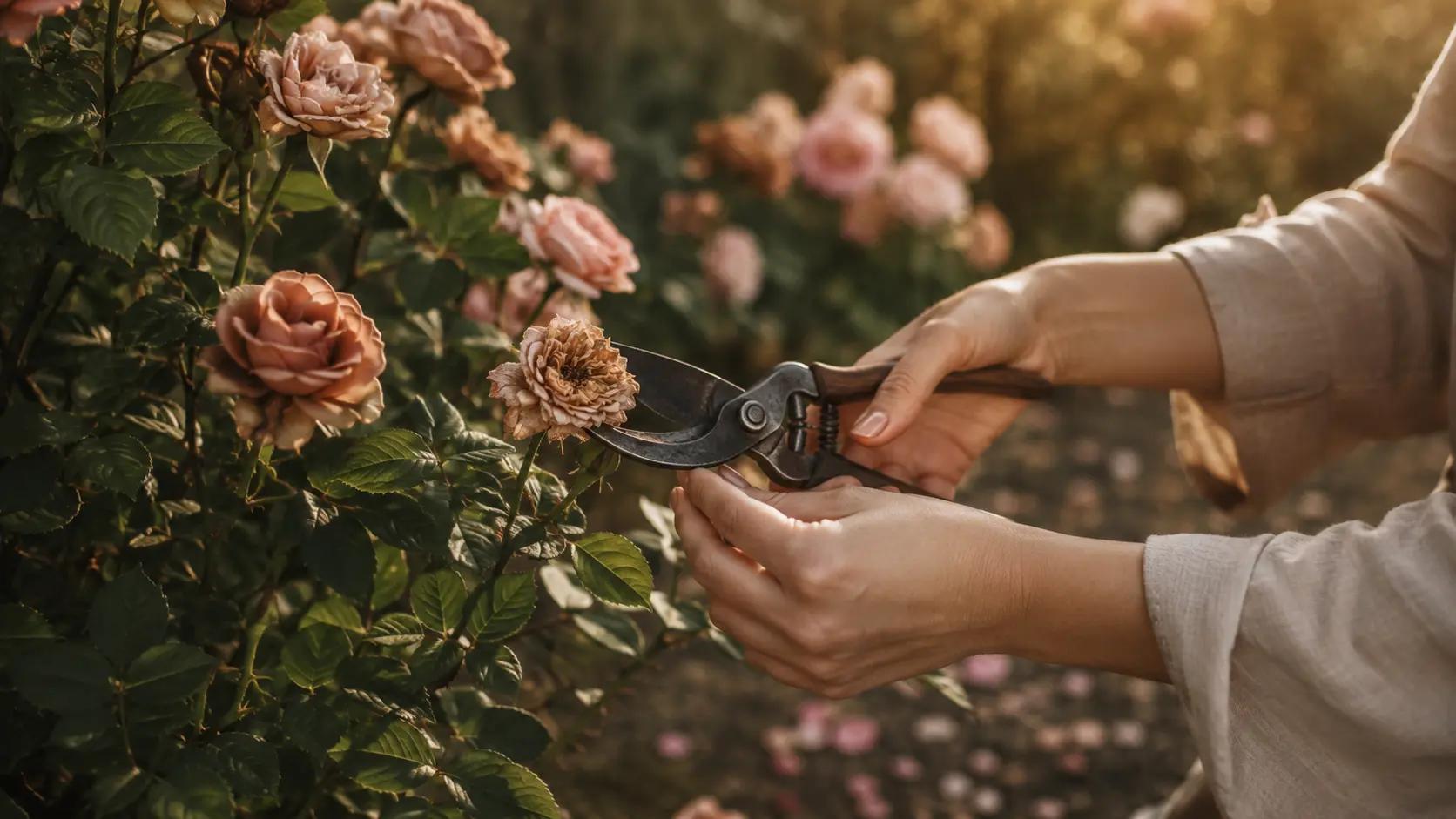
The first flush of roses is always the most spectacular. May and June bring those blooms you planted the bush for in the first place. Then the flowers fade, petals drop, and the garden takes on a slightly tired look. This is the moment when most gardeners make one of two mistakes: they cut too hard, or they don't cut at all.
July is the month that decides whether you'll get a second wave of colour in August and September. The answer depends entirely on what you do with those spent blooms right now.
Which type of rose do you have: this changes everything
Before you pick up the secateurs, there's one essential thing to understand: not all roses bloom more than once.
Repeat-flowering roses (Rosa spp. — Hybrid Tea, Floribunda, David Austin English Roses, Grandiflora) bloom in flushes throughout the season. These are the ones that respond to deadheading with new flowers. If you have a modern cultivated bush, it almost certainly belongs to this group.
Once-blooming roses (Rosa spp. — old garden roses, wild species, some shrub roses) give one magnificent display per season, then set hips. Deadheading them won't trigger new blooms, but it does tidy the bush and redirects energy away from seed production — useful if you don't need the hips for display or wildlife.
Not sure which group your rose belongs to? Check the bush: if it already bloomed earlier this season and you can see new buds forming alongside the spent ones, it's a repeat-flowerer.
When to deadhead: signs a bloom is finished
Don't rush, but don't wait too long either. The right moment is when:
the central stamens have darkened and dried
petals have started dropping on their own, or only a few remain clinging
fallen petals are visible on the ground beneath the bush
If the flower still holds its shape but has lost colour and freshness, you can wait another day or two — or cut now. The end result is the same.
Don't wait for every bloom on the bush to finish at once. Deadhead as each flower fades — every cut you make triggers a new shoot earlier.
How to cut correctly: technique and depth
Tools. Sharp secateurs — non-negotiable. A blunt blade crushes stem tissue, slowing healing and opening the way for disease. Wipe the blades with alcohol or any disinfectant before you start, especially if you're moving from bush to bush.
Where to cut. The key rule: cut just above the first leaf with five leaflets (a full compound leaf) below the spent bloom. The bud in that leaf axil will produce a strong shoot with a proper flower.
If the stem is thin or weak, drop down to the second five-leaflet leaf: the resulting shoot will be more mature, though it will take an extra five to seven days to bloom.
Angle. Cut at 45° angled away from the bud — the classic rule that lets water run off the cut surface rather than pooling near the bud.
Cutting depth by rose type:
Hybrid Tea (large-flowered) — to the first five-leaflet leaf below the spent bloom
Floribunda (cluster-flowered, shrub) — to the second or third five-leaflet leaf for a stronger new shoot
Climbing roses (repeat-flowering) — remove only the spent flower cluster; don't cut into the main framework
Standard (tree) roses — to the first five-leaflet leaf, keeping the crown shape balanced
After cutting: clear fallen petals and clippings from around the base of the bush. They can harbour fungal spores, especially in the warm, humid conditions of midsummer.
What to do after deadheading: feeding and watering
Deadheading is a stress and a signal at the same time. To turn that signal into buds rather than leafy growth, the plant needs support.
Feeding. One to two days after cutting, apply a phosphorus and potassium fertiliser — it promotes flowering rather than vegetative growth. Good options: monopotassium phosphate (10–15 g per 10 litres of water), potassium sulphate (15 g per 10 litres), or a dedicated rose fertiliser labelled for the post-bloom phase. Keep nitrogen low right now, or you'll get lush leaves instead of flowers.
For an organic approach, wood ash (150–200 g around the base, watered in) provides potassium and trace minerals.
Watering. July is hot, and roses recovering from deadheading need reliable moisture. Water deeply and infrequently — every three to four days, around 10–15 litres per mature bush, preferably in the morning. Never water over the foliage: wet leaves are the primary route for black spot (Diplocarpon rosae).
Mulch. If you haven't mulched yet, July is the right time. A 5–7 cm layer of bark chips, wood shavings or compost around the base retains moisture, cools the soil and significantly reduces how often you need to water.
How long until the second flush
From deadheading to a fully open bud takes an average of 45 to 60 days for most Hybrid Tea and Floribunda roses. Cut in the first two weeks of July and the second flush arrives in late August or early September — when the heat has eased and roses typically hold their blooms longer, with richer, deeper colour.
What affects the timing: variety (some roses rebloom fast, others slowly), temperature (above 35°C slows everything down), moisture levels, and whether you've fed the plant.
Common mistakes that delay or prevent reblooming
Cutting to a bud without five leaflets. The axil of a one- or three-leaflet leaf produces a weak shoot — often blind, or carrying only a small, poor-quality flower.
Leaving hips on once-blooming roses. If the plant sets fruit, it puts energy there. For once-bloomers this is normal, but removing hips keeps the bush tidy and redirects some energy into the plant's overall health.
Feeding with nitrogen after deadheading. Nitrogen drives leafy growth at the expense of flowers. In July, phosphorus and potassium only.
Leaving fallen petals and leaves under the bush. Black spot (Diplocarpon rosae) and powdery mildew (Podosphaera pannosa) overwinter in plant debris. A clean base is the simplest preventive measure you can take.
Watering over the foliage in the heat of the day. Water droplets on leaves in bright sun act as magnifying lenses and cause scorch; wet foliage overnight is ideal for fungal growth.
Roses after a July deadhead usually produce one of the most beautiful flushes of the season. Autumn blooms open in cooler air, last longer on the bush, and carry a depth of colour that the June flowers rarely match. It's worth the wait.