
Some plants we grow with care — and some simply grow everywhere they can. These uninvited guests turn out to be the most aggressive allergens of the summer season. Goosefoot on waste ground, mugwort along roadsides, nettles in courtyards and ragweed on verges — all of them are actively flowering right now, producing pollen that means weeks of discomfort for millions of people.
The particular treachery of weed allergens is that they are almost impossible to avoid. They do not grow in botanical gardens or behind garden fences — they grow everywhere, in cities, along roads, on derelict land and in everyday courtyards.
Ragweed (Ambrosia artemisiifolia)
Ragweed (Ambrosia artemisiifolia) is the undisputed champion of plant allergens in Ukraine. Introduced accidentally from North America, it has spread across virtually the entire country.
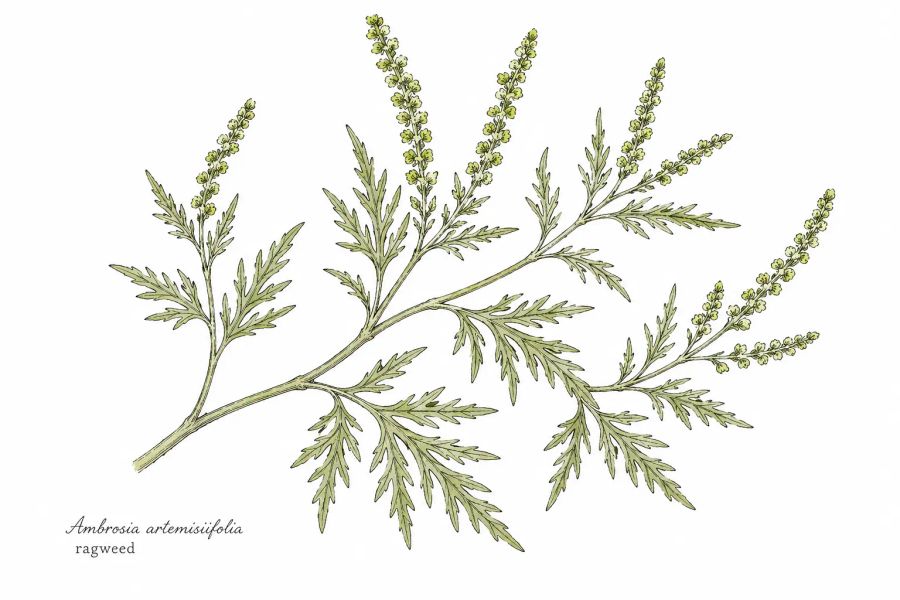
A single plant can produce up to a billion pollen grains per season, and those grains are light enough to travel 400 kilometres on the wind. Ragweed begins flowering in the second half of July, peaks in August and September, and even a few grains per cubic metre of air are enough to trigger symptoms in sensitive individuals. It resembles a bushy plant with finely divided, fern-like leaves and small yellow-green flower clusters at the tips of its stems.
Goosefoot (Chenopodium album)
Goosefoot (Chenopodium album) is one of the most common garden and wasteland weeds — and one of the least suspected allergens.
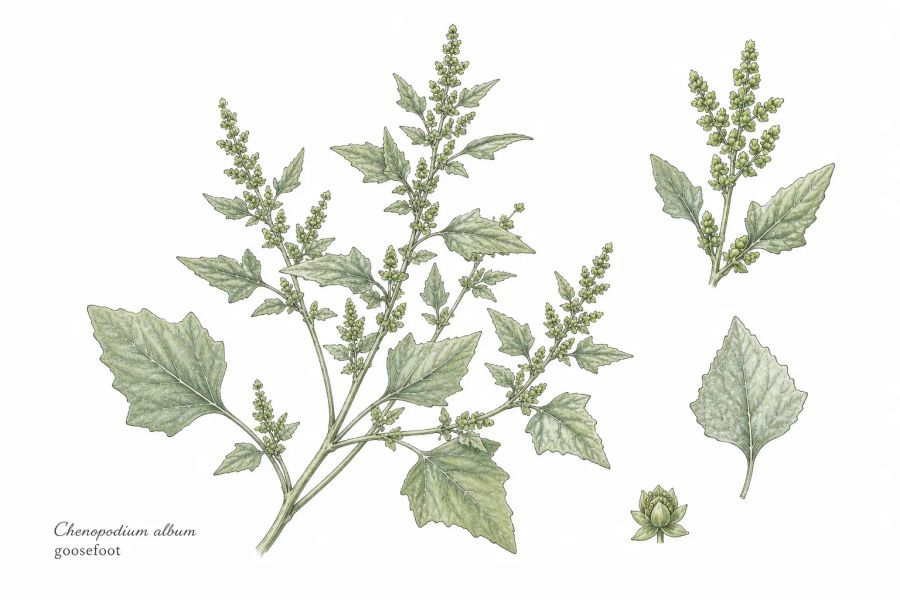
It flowers from July through September, producing enormous quantities of fine, almost invisible pollen. Recognisable by its diamond-shaped leaves dusted with a whitish coating, goosefoot often grows alongside ragweed and mugwort, meaning that in midsummer a sensitive person may face several allergens simultaneously.
Mugwort (Artemisia vulgaris)
Mugwort (Artemisia vulgaris) is an old acquaintance and one of the oldest documented allergens, growing along roads, railway embankments and neglected corners of any courtyard. Its peak is July through August, and it affects up to 30% of people with seasonal allergies.
Cross-reactivity with certain foods — celery, carrots, parsley, sunflower oil and honey — means that during peak season some sufferers also notice reactions to foods they normally tolerate.
Stinging nettle (Urtica dioica)
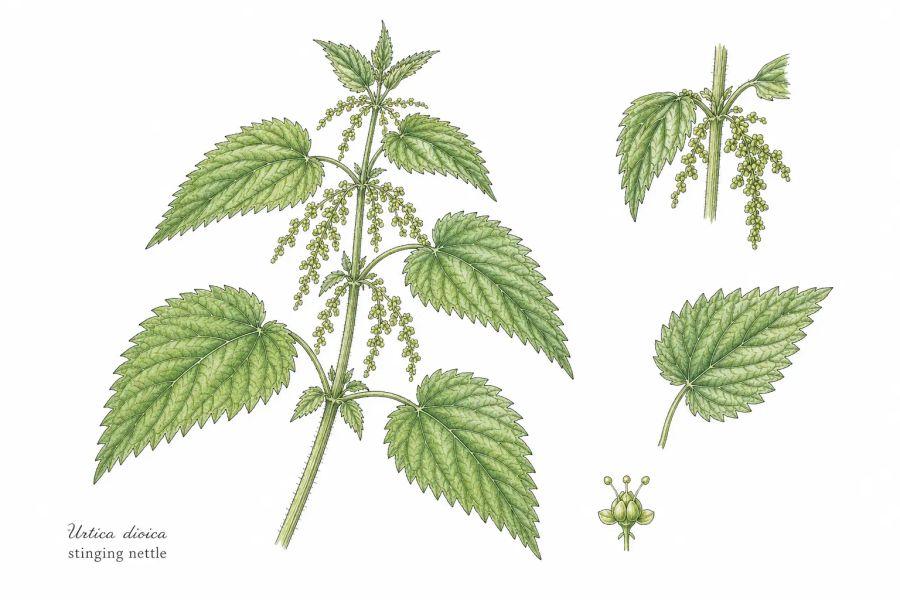
Stinging nettle (Urtica dioica) flowers from June through August and produces wind-dispersed pollen that most people overlook entirely, because the tiny greenish flower clusters are barely visible. Nettle allergy is less common than ragweed or mugwort, but it often triggers flare-ups in people whose immune system is already sensitised.
To get through the weed season: confirm your specific allergens through skin-prick testing or a specific IgE blood test; monitor daily pollen forecasts on services such as Meteum or Pollen.com; time outdoor activities for calm mornings after rain rather than dry, windy afternoons; and change clothes and wash your hair when you come indoors, since pollen settles on fabric and hair and continues to affect you even inside.